
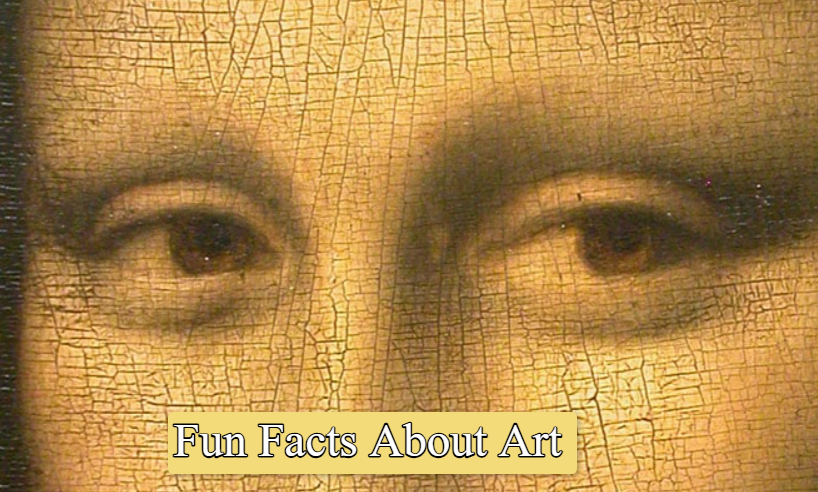
Fun Facts About Art
The universal language of art is the communication method of human spirit. From the sharp lines of charcoal in cave walls dating to prehistoric times, to the neon-lit, vibrant online galleries in 2026 the art world has been our longest-lasting witness. It is able to capture emotions or revolution as well as the sheer absurdity of our existence. However, behind the billion-dollar auctions and the quiet insanity that is the Louvre there is a bizarre world of oddities, hidden messages and even historical “glitches.”
No matter if you’re an experienced collector or simply likes an excellent van Gogh print The stories in these books provide a new layer of charm to each stroke. Get ready to dig deep into the depths of the gallery to discover the top 10 details about artwork which prove that the truth is more often than fiction.
1. The Mona Lisa Wasn’t Always Famous (The Heist That Made a Legend)
It could be shocking to discover that for a long time it was thought that the Mona Lisa was simply another painting at the Louvre.
It wasn’t considered to be the “greatest ever” before 1911. What happened? It was taken.
An employee at the museum identified as Vincenzo Peruggia walked out with the painting hidden in his smock. The subsequent media circus along with the global manhunt and the two-year gap in the museum’s wall transformed Leonardo da Vinci’s image into a worldwide icon. When it finally returned to the museum, a huge crowd of people who never been interested in art came to the museum to view the work which had disappeared.
- Funny Facts: For the 2 years that she was absent the crowds gathered just to stare on what was left of the blank area that was on the wall in which she was hanging.
- The Artistic Secret Da Vinci worked for more than 14 years working in this painting and died before he could say it was “finish.”
2. Art Used to Be an Official Olympic Sport
From 1912 to 1948 between 1912 and 1948, Olympic Games weren’t only about swimming and sprinting. The man who created this modern Olympics, Pierre de Coubertin believed that a true Olympian must be an artist as well as an athlete.
The awards were given for literature, architecture and music, painting as well as sculpture. The only problem?
Each entry must be in the spirit of sport.
- The downside: The category was ultimately canceled because artists were thought of as “professionals,” while Olympians were at the time legally required to become “amateurs.”
- The 2026 perspective: In today’s world of digital art and NFTs Many are advocating for the “Creative Olympics” that will return to the world stage.
3. The “Color Out of Space”: Ultramarine Was More Expensive Than Gold
In the Renaissance period, blue was the color that was used as the symbol of immense wealth. The pigment, also known as Ultramarine was produced by grinding the semi-precious stone known as Lapis Lazuli,
that had to be brought in the mines in Afghanistan.
Since it was prohibitively expensive – costing more than the weight in gold, artists typically kept it in the most sacred subjects like the robes worn by Jesus Christ or the Virgin Mary.
- Michelangelo’s Struggle There is speculation that Michelangelo had his painting The Entombment incomplete because he could not pay for more Ultramarine.
- Contemporary Era Nowadays, we make use of synthetic blue, however the intensity of the original Lapis Lazuli remains unmatched in historic restoration.
4. Vincent van Gogh Only Sold One Painting During His Lifetime
The tale of Vincent van Gogh is possibly the most touching in the history of art. Although his paintings such as the Starry Night are now selling for several hundred million dollars Vincent endured near constant the poverty of.
He painted over 2100 pieces within a mere decade however, he only sold one painting during the time his life was still in existence: The Red Vineyard.
- The Purchaser: It was purchased by Anna Boch, a fellow painter who was selling it for $400 Francs (about $2,000 today in dollars).
- Posthumous fame: Van Gogh’s sister-in-law Jo van Gogh-Bonger is an unheralded hero who worked for years after his death tirelessly advocating her work, until everyone began to notice.
5. Salvador Dali’s “Cheating” Signature Technique
The Surrealist master Salvador Dali was an expert in marketing as the artist he was. He was a fan of his luxurious lifestyle and came up with a “surreal” method of paying for his costly dining out.
Dali used to draw intricate drawings on the backs of checks which he used to purchase dinner. He was aware that a restaurant’s owner with a rational mind could accept a check that contained the original Dali sketch in the reverse! It was 10 times the price of the meal, therefore the checks were not cashed and Dali basically ate free.
- The Chupa Chups Logo: Did you know that Dali also created the logo for the infamous Chupa Chups lollipops?
He argued that it should be placed on the top of the wrapper, so it would be visible.
6. Picasso Was a Suspect in the Theft of the Mona Lisa
Recalling that Mona Lisa heist in 1911, police were so desperate to find leads that they even arrested the poet Guillaume Apollinaire, who then was accused of being a friend of Pablo Picasso.
Picasso was taken into custody to be questioned due to
He had previously bought Roman statuettes, which were stolen out of the Louvre by another theft thief.
- the Courtroom Drama Picasso reported to weep during the trial and denied having any knowledge of Apollinaire. The two were eventually both clear about the Mona Lisa theft, but the incident left as a dark mark on Picasso’s first career.
- Guernica History: Even with this tension, Picasso went on to paint Guernica perhaps the most powerful anti-war work in the history of art.
7. The Hidden Anatomy in Michelangelo’s Sistine Chapel
Michelangelo was an expert in his human anatomy and often carried out secret dissections to gain a better understanding of the body. When he painted the ceiling in the Sistine Chapel, it is possible that he concealed his knowledge of science in the Pope’s ear.
In the famous drawing In the famous panel Creation of Adam, the form of the cloak that is red surrounding God represents an anatomically accurate depiction that shows the Human brain.
- The theory: Some art historians believe that Michelangelo was implying”the “gift of intelligence” was equally amazing as the soul itself.
- The Spine Another panel the image of the neck and throat reflects the human anatomy brain stem and spinal cord.
8. The World’s Largest Art Gallery is the Hermitage
If you were to spend just one minute looking at each item within the State Hermitage Museum in Saint Petersburg, it would take around 11 years to go through everything.
The museum has more than 3 million items, which includes the world’s largest collection paintings.
- The Guardians This museum has become well-known because of the “Hermitage cat collection.” In the 1800s, the cats were employed at the Museum to safeguard the museum’s treasures from rats, rodents and mice. They even have a press secretary!
9. Leonardo da Vinci Could Write with one hand and draw using the other
Da Vinci da Vinci was considered to be the greatest Polymath. His brain functioned to the level that very few ever surpassed. He was ambidextrous, and was known for his practice of the mirror,
Writing from left to right to ensure that his notes can only be read when he was held by the mirror.
Incredibly it was reported that he could write a formal note with one hand, while drawing a masterpiece using the other.
- Notebooks These codices include designs for flying machines tanks as well as an early robot, all created with an artistic rigor that resembles contemporary blueprints.
10. The Color “Vantablack” Sparked an Artist War
In the world of contemporary art color are “owned.” Vantablack is among the darkest known substances and absorbs 99.96 percent of light. It can make 3D objects appear like the flat and 2D dark holes.
Artist Anish Kapoor purchased the exclusive rights to use Vantablack in his art which sparked a furious debate within the artistic community.
- In retaliation, The artist Stuart Semple was the first to respond by launching “World’s Most Pinkest pink” and “World’s Glitterst Glitter” prohibiting Anish Kapoor from buying these items.
- 2026 Update It was the time when “Color War” challenged the limits of the science of materials in the field of art and led to more dark blacks and more vivid colors accessible to the general public today.
Why Art Facts Matter in 2026
In an age which is dominated with artificial intelligence and Generative art knowing the human stories of these works is more vital than ever. These interesting information about the painting will remind you that it’s not only about a finished piece of work; it’s about the passion with loss, the ego and the talent of those who held the paintbrush.
Quick Recap of Art Trivia:
- Mona Lisa: Started her career thanks to a heist.
- Olympics: Art was a sport that competed during the period of 36 years.
- Blue Paint: Was literally worth more than gold.
- Picasso: Was a prime suspect in a museum robbery.
- Dali Utilized art as a way to pay for dinner.
“Art” has a life-long thing. Each time you talk about the following facts or go to a local art gallery, you keep the 40,000-year-old tradition alive.
About The Author