
Blockchain Intellectual Property
Businesses today operate in an increasingly digital environment where ideas, designs, software, content, inventions, and other intellectual assets can hold significant commercial value. As companies create and exchange more digital assets, protecting intellectual property has become an important part of long-term business strategy. Traditional intellectual property processes remain essential, but modern technologies can provide additional ways to document, manage, and verify valuable assets.
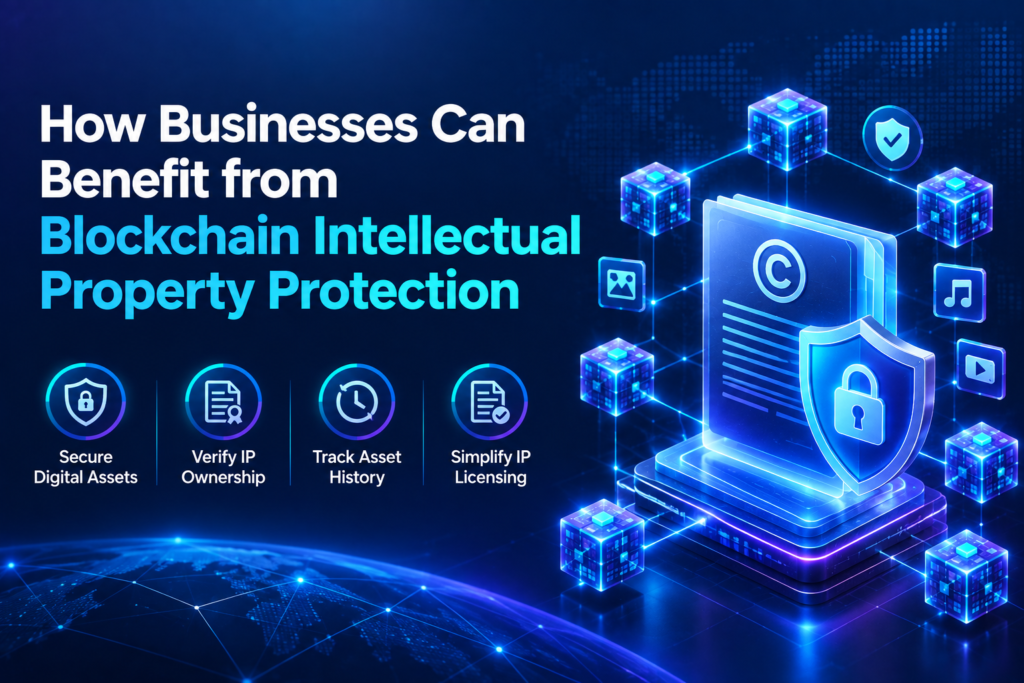
Blockchain Intellectual Property Protection offers businesses a technology-driven approach to managing intellectual property records. Blockchain can create transparent, traceable, and tamper-resistant records that help organizations document the history of digital assets, support ownership verification, manage licensing activities, and improve collaboration.
For businesses exploring digital transformation, blockchain can become part of a broader technology ecosystem alongside artificial intelligence, cloud computing, automation, cybersecurity, and data management. App Scoop helps businesses explore modern software and technology solutions designed around their specific operational requirements.
Understanding Blockchain Intellectual Property Protection
Blockchain is a distributed ledger technology that records information across a network. Instead of depending entirely on one centralized database, blockchain can maintain synchronized records across participating systems.
When applied to intellectual property management, blockchain can be used to record information associated with digital creations and related transactions. For example, a business could create a cryptographic hash of a document, design, or other digital asset and record that hash on a blockchain.
The resulting record can help establish that a particular version of an asset existed at a specific point in time. It can also support a transparent history of certain transactions involving that asset.
Why Intellectual Property Needs Modern Protection
Digital assets are easy to copy, modify, distribute, and share. A company may spend months developing a software product or creating a unique design, only to discover that unauthorized copies are being distributed online.
Businesses can also face disputes involving:
- Ownership of digital creations
- Creation dates
- Licensing rights
- Asset modifications
- Unauthorized usage
- Royalty payments
- Transfers between organizations
- Collaboration among multiple creators
Blockchain cannot eliminate these risks entirely, but it can provide additional infrastructure for documenting important information and transactions.
How Businesses Can Benefit from Blockchain Intellectual Property Protection
The value of blockchain for intellectual property depends on how it is implemented. When properly designed, blockchain-based systems can offer several potential business benefits.
Establishing Verifiable Creation Records
One of the most useful applications of blockchain is documenting when a digital asset existed.
A company can generate a unique hash for a digital document or asset and record the hash with a timestamp. If the asset is later questioned, the blockchain record can provide supporting evidence that the corresponding digital version existed at that time.
This can be useful for businesses that regularly produce:
- Software code
- Product designs
- Technical documents
- Digital artwork
- Research materials
- Marketing assets
- Proprietary processes
A verifiable record can make intellectual property management more organized and transparent.
Improving Ownership Documentation
Ownership can become complicated when several people contribute to a project. Designers, developers, consultants, agencies, partners, and employees may all participate in creating intellectual property.
Blockchain can provide a shared record of relevant ownership-related events. Businesses can use blockchain-based systems to document asset creation, transfers, licensing activity, or other transactions.
The blockchain record does not automatically establish legal ownership, but it can complement contracts, registrations, and other legal documentation.
Strengthening Digital Asset Management
Businesses often manage thousands of digital files across different departments and platforms. Keeping track of versions, permissions, ownership, and usage rights can become difficult as an organization grows.
Blockchain can contribute to a more structured digital asset management process.
Tracking Asset History
A blockchain-based system can maintain a chronological record of relevant transactions associated with an asset.
For example, a product design may go through several stages:
- Initial creation
- Internal modification
- Approval
- Licensing
- Distribution
- Ownership transfer
- Renewal or expiration
Recording important events can make it easier for authorized users to understand the history of the asset.
Reducing Version Confusion
Digital assets can have multiple versions, particularly when different teams work on the same project. Blockchain-based verification can help organizations distinguish between documented versions.
By associating a cryptographic hash with an asset, businesses can compare a file against its recorded fingerprint to determine whether the content has changed.
This can be especially valuable for software development, design workflows, and research environments.
Supporting Intellectual Property Licensing
Licensing is an important source of revenue for many businesses. Companies may license software, trademarks, designs, photographs, content, patents, or other intellectual property to customers and partners.
Managing licensing agreements manually can require significant administrative effort.
Blockchain can support licensing management by maintaining records of relevant agreements and transactions.
Creating Transparent Licensing Records
A blockchain-based system can provide a shared record of licensing activity among authorized participants.
For example, a company licensing a digital design to multiple businesses could maintain records showing when each license was issued and what transaction occurred.
This can improve visibility and help reduce misunderstandings between parties.
Supporting Automated Workflows
Smart contracts can be used to automate certain predefined blockchain-based processes. Depending on the legal and technical structure of a licensing arrangement, a smart contract could support actions such as recording a transaction or triggering a payment when specified conditions are satisfied.
Automation can reduce repetitive administrative tasks and improve operational efficiency.
However, businesses should ensure that smart contracts are designed carefully and aligned with applicable legal agreements.
Improving Royalty Management
For businesses that earn revenue from intellectual property licensing, royalty tracking can be challenging.
Traditional systems may involve multiple databases, spreadsheets, invoices, payment platforms, and intermediaries.
Blockchain can provide a shared transaction history that helps organizations track relevant licensing activities.
Greater Payment Visibility
Blockchain-based systems can potentially make certain payment-related records easier to trace. When integrated with suitable payment and accounting infrastructure, organizations may be able to create more transparent workflows around royalty transactions.
This can be useful for industries such as digital media, software, publishing, music, and creative services.
The actual payment method and regulatory requirements will depend on the specific implementation and jurisdiction.
Reducing Intellectual Property Disputes
Intellectual property disputes can consume considerable time and resources. Questions about ownership, creation dates, licensing terms, and asset modifications can become difficult to resolve when records are fragmented.
Blockchain can provide an additional source of historical information.
Supporting Evidence With Time-Stamped Records
A blockchain record can help demonstrate that information associated with a digital asset was recorded at a particular time.
For example, suppose a company creates an original software component and records its digital fingerprint on a blockchain. If another party later claims that the company copied the component from them, the historical record may provide supporting evidence about the existence of the company’s version.
Blockchain records should be considered supporting evidence rather than a replacement for legal IP registration or professional legal advice.
Enhancing Collaboration Between Businesses
Modern businesses frequently collaborate with external agencies, developers, designers, suppliers, research organizations, and technology partners.
When several organizations contribute to a project, managing intellectual property information can become complicated.
Blockchain can provide a shared record for authorized participants.
Creating a Common Source of Information
Instead of maintaining completely separate records, participants can potentially reference a shared blockchain ledger for specific transactions and asset-related information.
This can help reduce inconsistencies and improve transparency.
For example, a software company working with an external development partner could use a blockchain-supported system to document important development milestones and asset transfers.
Protecting Digital Content and Creative Work
Content creators and businesses increasingly depend on digital media for marketing and revenue generation.
Photographs, illustrations, videos, articles, music, graphics, and other digital works can be copied quickly.
Recording Content Authenticity
Blockchain can be used to create verifiable records associated with digital content.
A creator may record the hash of an original file, providing a reference against which future versions can be compared.
This can support authenticity verification and help businesses maintain better records of their original content.
Benefits for Different Types of Businesses
Blockchain-based intellectual property systems can have different applications depending on the industry.
Software Companies
Software companies can document code versions, development milestones, licensing information, and other digital assets.
Design and Creative Agencies
Creative organizations can use blockchain-based records to document the creation and licensing history of designs, graphics, videos, and other content.
Research Organizations
Research-focused businesses can use blockchain to document certain research materials, development milestones, and data-related records.
Media and Entertainment Businesses
Media companies can explore blockchain for content ownership records, licensing workflows, royalty management, and digital asset tracking.
Manufacturing Companies
Manufacturers can potentially use blockchain to document product designs, engineering files, supply-chain-related intellectual property, and technology licensing.
Blockchain and Smart Contracts
Smart contracts can play an important role in blockchain-based intellectual property ecosystems.
A smart contract is a program that executes predefined instructions on a blockchain network. In an IP management environment, smart contracts can support specific automated workflows.
For example, a licensing system could be designed to record license issuance and trigger predefined actions after certain conditions are met.
Automating Repetitive Processes
Automation can reduce manual work associated with:
- License tracking
- Usage records
- Payment triggers
- Renewal notifications
- Ownership transfers
- Transaction documentation
The exact capabilities depend on the blockchain architecture and the surrounding software system.
Challenges Businesses Should Consider
Although Blockchain Intellectual Property Protection offers potential benefits, businesses should also consider its limitations.
Legal Considerations
Blockchain records do not automatically create legal intellectual property rights. Copyright, patent, trademark, and other IP rights are governed by applicable laws and regulations.
Organizations should combine blockchain technology with appropriate legal documentation and registration processes.
Privacy and Confidentiality
Businesses should be careful about placing sensitive information directly onto a blockchain. Some intellectual property may contain confidential trade secrets or commercially sensitive data.
A better architecture may involve storing sensitive information securely off-chain while recording only appropriate verification data on the blockchain.
Technical Complexity
Building a blockchain-based IP platform requires knowledge of software development, blockchain architecture, cybersecurity, data management, and integration.
Businesses should evaluate whether blockchain actually solves a specific operational problem before investing in implementation.
How App Scoop Can Support Blockchain-Based Business Solutions
A successful blockchain implementation requires more than simply creating a blockchain network. Businesses need an overall technology strategy that connects blockchain with their existing systems and workflows.
App Scoop works across areas such as software development, AI automation, API integration, intelligent data processing, and modern digital solutions. These capabilities can help businesses explore technology architectures that fit their operational needs.
For example, a blockchain-based intellectual property platform could potentially integrate with a company’s existing document management system, cloud infrastructure, authentication system, CRM, payment platform, or enterprise application.
Building Solutions Around Business Requirements
Every business has different intellectual property requirements. A technology solution should therefore be designed around the organization’s assets, workflows, users, compliance requirements, and integration needs.
Instead of implementing blockchain simply because it is a popular technology, businesses should identify specific challenges first and then determine whether blockchain provides a practical solution.
The Future of Blockchain Intellectual Property Protection
As digital businesses continue to grow, intellectual property management will become increasingly connected with advanced technology.
Blockchain may become part of broader systems that combine artificial intelligence, automation, digital identity, cybersecurity, cloud computing, and data analytics.
Future platforms could make it easier for businesses to track intellectual property throughout its lifecycle, from creation and verification to licensing, transfer, and monetization.
The technology may also support new approaches to digital ownership and content management as industries continue adapting to increasingly digital business models.
Conclusion
Blockchain Intellectual Property Protection can provide businesses with a modern way to strengthen digital asset management, improve recordkeeping, support licensing workflows, and create verifiable histories of intellectual property-related activities.
From software and creative content to product designs and research materials, blockchain can help organizations maintain more transparent and traceable records. Its value becomes stronger when it is integrated with existing legal, technical, and operational processes.
However, blockchain should not be viewed as a complete replacement for traditional intellectual property protections. Legal registrations, contracts, cybersecurity practices, access controls, and organizational policies remain important.
Businesses that carefully evaluate their requirements can explore blockchain as part of a broader digital transformation strategy. With the right architecture and implementation approach, blockchain can become a useful component of modern intellectual property management.
App Scoop can help businesses explore blockchain development and other technology solutions designed around their digital goals. By combining blockchain with software development, AI automation, API integration, and intelligent data processing, organizations can build technology ecosystems that are better prepared to manage and protect valuable digital assets.
About The Author