
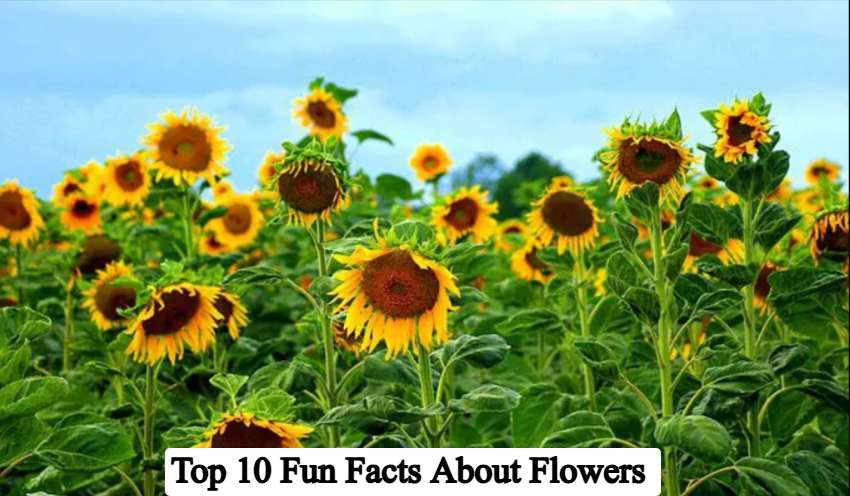
Top 10 Fun Facts About Flowers
The flowers are silent writers of the planet. They don’t only make windows look pretty or brighten up our gardens. They are biological powerhouses that have the past, mystery and an incredible number in “personality.” No matter if you’re a dedicated gardener or a casual gardener, or simply loves fresh flowers The universe of botany is full of many secrets that are more fascinating than what they seem at first.
In this in-depth look into this deep dive, we will look at the most amazing astounding details about flowering. From blooms that resemble the scent of decay to seeds from the past that have endured for millennia, get ready to experience your most beloved flowers in a new way.
1. The Titan Arum: The Giant That Smells Like Death
If we imagine flowers, we typically imagine delicate and sweet scents such as jasmine or lavender. But Titan Arum, Titan Arum ( Amorphophallus titanum) which is sometimes referred to in the field as corpse Flower is the opposite approach to attract.
- Size is important: This is one of the largest inflorescences that are not branched around the globe with a height of more than 10 feet.
- the Scent In order to attract the most popular pollinators – carrion beetles and flesh flies, it emits a strong scent of rotting meat.
- Rare Bloom The time frame can range from seven years to 10 years for one flower to open and the flower lasts for a period of one to two days.
This is an excellent illustration of evolutionarily-adaptive strategies. In odors that resemble an animal carcass and smelling like a carcass, the Titan Arum ensures it stands out from the thick forests of Sumatra which is where sweet smells are not uncommon however “death” is an appropriate dinner bell to its insect-friendly helpers.
2. Roses Are Actually Related to Your Favorite Fruits
If you’ve ever observed an equivalence between the shape of wild roses and a piece of apple and an apple, it’s probably not just a coincidence. The roses are part of the Rosaceae family which is a vast collection of plants that provide us with a variety of our favorite food items.
- Culinary Cousins The pears, apples cherries and plums, as well as peaches as well as apricots and strawberries all belong to the rose family..
- edible petals: Most rose petals are edible and utilized for everything, from teas and cocktails and desserts Middle Eastern desserts.
- “The Rose Hip: After the petals of a rose fade and dies, it leaves behind a fruit known as”hip. “hip,” which is loaded full of higher levels of vitamin C than the majority of citrus fruits.
Understanding this connection between plants and flowers helps clarify why many fruits possess the most delicious “floral” scent when ripe and perfect.
3. The 3,000-Year-Old “Resurrection” Bloom
Nature is awe-inspiring memory. In the 90s scientists found roots of an old Sacred Lotus ( Nelumbo nucifera) in a degraded lake in China.
- Time Travelers Utilizing carbon-dating scientists determined that the seeds were about 1.300 million years old.
- The Magic: When planted, the seeds germinated and then grew into healthy flowering plants.
- Longevity Secret Lotus seed is an extremely thick coat. It also is a host of a special enzyme that repairs damage to proteins which makes it the ultimate source of biological longevity.
It is a symbol of strength and longevity and proves that even after centuries of inactivity the lotus can be able to blossom.
4. Sunflowers: The Ultimate Solar Trackers
Sunflowers don’t just look pretty They are also highly efficient machines. Young sunflowers display a characteristic known as Heliotropism.
- The Light is Following In the morning the flower heads rotate towards the sun when it moves between east and west.
- The Nightly Reset After dark, the HTML0s return to the east in order to wait for sunrise.
- Pollinator Heat After the sunflower has matured the flower stops moving and faces towards the east. Why? Because a flower that faces east warms up more quickly at dawn, attracting more than five times the amount of pollinators (like bees) than a flower that is cold.
Furthermore, sunflowers are employed for phytoremediation. They excel at taking the toxic heavy metals and radiation that is emitted from the soil this is the reason they were planted in large in large quantities following that of the Chernobyl and Fukushima catastrophes.
5. Saffron: The most expensive spice comes from an a flower
Have you ever thought about why saffron is so costly? It’s because it’s”the “heart” of a particular flower.
- The Origin: Saffron comes from the Crocus sativus more commonly called”the Saffron Crocus.
- The Work: Each flower produces just three tiny thread-like structures, called stigmas.
- The Number: To produce just one pound of saffron you will need to collect around 75,000 blooms by hand.
This labor-intensive process makes saffron even more important in the weight of its content than gold. Each time you enjoy the earthy floral aroma in a risotto or paella it is drinking the richness of a plethora of hand-picked blooms.
6. Orchids: The Master Mimics
Orchids may be the most varied and “clever” group of plants that exist on Earth. Certain plants have evolved so that they look and smell exactly like female insects in order to fool males to “mating” with their female counterparts, resulting in the pollination process.
- the Bee Orchid: This flower resembles an adult female bumblebee seated on the petals.
- The naked Man Orchid: These blooms look like tiny human figures with headdresses.
- The Vanilla Connection: Did you know that your favorite Ice cream flavor is derived through an orchid? It is the Vanilla plantifolia is the sole orchid to produce an edible fruit (the vanilla bean).
Orchids are present on every continent, with the exception of Antarctica They exhibit a level of diversity which is virtually unmatched in the world of plants.
7. Tulips Were Once Worth More Than Gold
In the 1630s in the 1630s, the Netherlands was caught up into “Tulip Mania.” It was the first major speculation economy bubble.
- High-end Status They were recently introduced luxury item and their vivid, “broken” colors (actually caused by virus) were highly sought-after.
- The High: At the height of the trend the single bulb of tulip might be more expensive than a luxury home in Amsterdam.
- the crash: The market eventually crashed, leaving many investors with nothing more than some onions-like bulbs.
Today, the tulip is an emblem of the Netherlands However, fortunately they’re now less expensive to the common gardener.
8. Some Flowers Bloom Only at Night
Although most flowers are bloom to greet the dawn sun, a secluded world of night blooms is available to those who are up late.
- Moonflowers The large white blooms pop up quickly at dusk, and then glow in the moonlight.
- Queen of the Night A rare species of Cactus blooms only once per year, only for a single night, and then dies in the morning.
- moth pollinators They are generally pale yellow or white to be visible in darkness and release heavy sweet scents to attract pollinators at night such as bats and moths.
The Cereus that blooms at night is a popular choice by plant enthusiasts due to its dramatic, brief-lived display which reminds us of the beauty that is fleeting in nature.
9. Broccoli and Cauliflower Are Actually Flowers
If you’ve had trouble trying in convincing your children to consume their vegetables you can inform them that they’re not eating vegetables; they’re eating flowers..
- The Harvest Broccoli and cauliflower and artichokes have all been harvested before their flower buds get an opportunity to open.
- The Bloom When left out in the open, an individual head of broccoli will eventually burst into a mass of tiny, yellow flowers.
- Edible Botany It is a reminder that the system of food production are interconnected with the cycles of reproduction of plants.
When you next steam broccoli, take a close look at the “florets”–you’re seeing thousands of tiny, unbloomed blooms.
10. The Gas Plant: A Flower That Can Catch Fire
It is Dictamnus albus is commonly referred to in the popular name gas Plant (or “Burning Bush” produces an oil with a lemon scent that is extremely flame-proof.
- An actual spark On warm, dry summer evenings, the volatile oils may build up within the clusters of flowers.
- The Experiment If you keep an open flame near it, then the oil may spark, causing a short blue flame that does not harm the flower it self.
- the scent Though it might sound risky gardeners love it due to its stunning white and pink spikes as well as its fresh citrus scent.
This remarkable defensive chemical or the byproduct of metabolism is one of the most cool “parlor tricks” in nature.
Conclusion: Why Flowers Matter
Flowers are much more than flowers are more than a visually appealing pleasure. They are essential to our environment offering food to insects, medicines for us as well as a crucial component in the web of life. It doesn’t matter if it’s the resilient of the lotus seed or the appearance that an orchid displays flowers can teach us about the complexity and beauty of evolution.
When you next pass by a plant or receive a flower be sure to take in the many years of human history and the amazing “intelligence” inside the flowers. In the realm of floristry and botany is an endless tale of amazement.
About The Author