NFC and RFID Technology
Technology is changing the way businesses communicate, share information and manage everyday interactions. From professional networking to identification systems, contactless solutions are helping organisations create smoother experiences for employees, customers and business partners.
Two technologies contributing to this shift are Near Field Communication (NFC) and Radio Frequency Identification (RFID). Although they serve different purposes, both can help businesses connect physical products and processes with digital systems.
Understanding NFC Technology
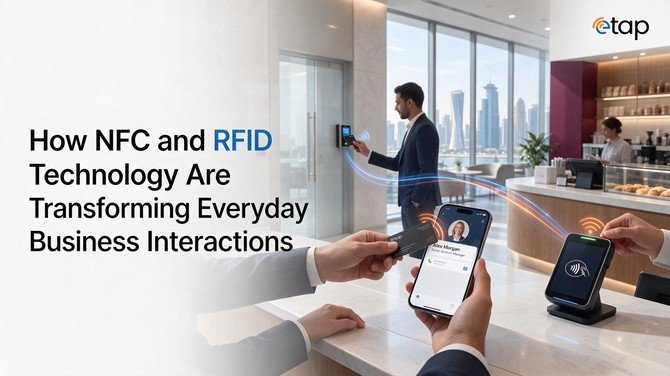
NFC is a short-range wireless communication technology that allows compatible devices to exchange information when brought close together. It is commonly used in digital business cards, smart displays, contactless information sharing and other interactive applications.
For example, an NFC-enabled business card can contain a link to a digital profile. When someone taps the card with a compatible smartphone, the profile opens, allowing them to view contact details, websites and social media links.
This approach can make professional networking more convenient, particularly at conferences, exhibitions, corporate meetings and business events.
Where RFID Fits into Business Operations
RFID uses radio waves to identify and communicate with compatible tags or cards through an RFID reader. Depending on the technology and system configuration, RFID can support applications such as identification, inventory processes and access management.
Businesses should select the appropriate RFID card or tag based on their existing readers, software and operational requirements. Compatibility is important because not every RFID card works with every system.
Practical Applications for Businesses
NFC and RFID can support different business needs:
- Professional networking: NFC cards provide a convenient way to share digital contact information.
- Employee identification: Printed ID cards help organisations identify staff members.
- Visitor management: Visitor cards can support identification procedures at reception areas.
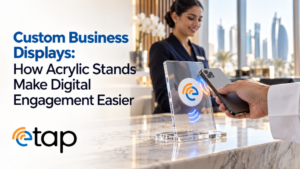
- Customer engagement: NFC-enabled displays can direct customers to online information.
- Business communication: QR codes and digital profiles make it easier to access websites, menus and contact details.
Choosing the Right Solution
Before adopting a contactless product, businesses should identify the problem they want to solve. A professional who regularly attends networking events may benefit from an NFC business card, while an organisation with an established access-control system may need compatible RFID cards.
Material, printing quality, branding, chip compatibility and the intended use should all be considered before making a decision.
Businesses exploring contactless products, NFC digital business cards and RFID-related solutions in Qatar can learn more through ETAP’s NFC digital business cards and RFID solutions.
Final Thoughts
NFC and RFID are not simply technology trends; they are practical tools that can improve how organisations handle everyday interactions. By choosing solutions that match their requirements, businesses can make communication more convenient while creating a more connected experience for customers, employees and visitors.
About The Author